
What July Revealed About Fashion's Next Chapter
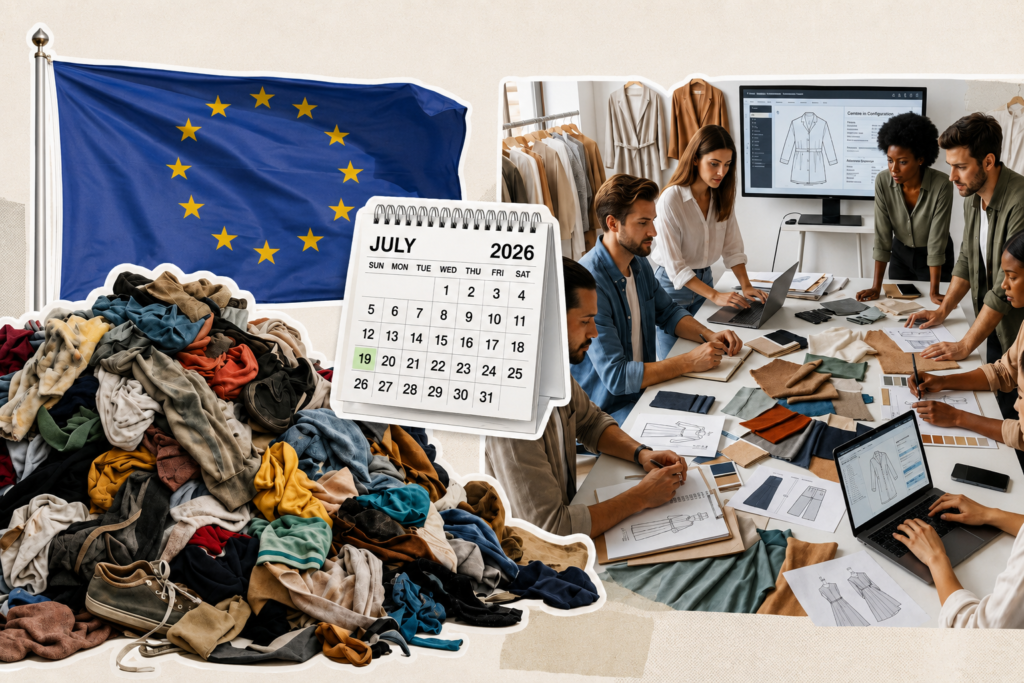
July has quietly marked two important milestones for fashion.
On 19 July, the EU’s restrictions on destroying unsold apparel, clothing accessories and footwear came into effect for large companies under the Ecodesign for Sustainable Products Regulation (ESPR). Around the same time, the European Commission’s Digital Product Passport Registry became operational, providing the infrastructure that will support future of Digital Product Passports.
These developments seem distinct in their purpose, yet together they point towards the same broader direction.
For many years, the industry’s focus has understandably centred on bringing products to market. Designing them well. Sourcing them responsibly. Manufacturing them efficiently. Selling them successfully.
Today, another question is beginning to shape that conversation:
What happens after the first sale?
Repair, resale and recycling are often discussed as separate initiatives. In practice, they share a common dependency.
A product needs to remain understandable long after it has left the factory.
The decisions that shape a product
Consider a jacket that’s being developed today.
Long before production begins, months of decisions have already shaped the product.
Materials have been evaluated.
Suppliers assessed.
Construction methods refined.
Samples revised.
Performance tested.
By the time the collection reaches the shop floor, those decisions have fulfilled their immediate purpose and the team has moved on to the next season.
Years later, many of those same decisions become relevant again.
A repair partner may need to understand how the garment was constructed.
A resale platform may require reliable information about its composition.
A recycler needs accurate fibre and component data to recover materials effectively.
The product has moved into a different phase of its lifecycle, yet the knowledge created during its development continues to hold value.
Products aren’t the only assets worth preserving
The industry’s growing focus on extending product life is making that information more valuable than it has ever been.
According to the European Environment Agency, textiles have the fourth-highest environmental and climate impact in Europe after food, housing and mobility. The agency estimates that the average European consumes around 19 kg of textiles each year while generating approximately 16 kg of textile waste.
The European Commission has also estimated that between 4% and 9% of textile products placed on the EU market are destroyed before they are ever used, one of the drivers behind the recent ESPR restrictions.
These figures are often presented to illustrate the environmental impact of the fashion industry.
They also point to a broader transition in the way products and materials are being valued.
The restrictions on destroying unsold textiles encourage businesses to consider what happens after a product’s first intended destination. Repair, resale, remanufacturing and redistribution are becoming increasingly important parts of the product journey, rather than activities that sit alongside it.
Deadstock tells an interesting story
The growing use of deadstock materials reflects a similar shift in thinking.
Within fashion businesses, it is not uncommon for materials originally sourced for one collection to find a place in another. Commercial priorities evolve, demand changes and collections develop in different directions. Product teams have always adapted to these realities.
What is changing is the value being placed on preserving both products and the knowledge that surrounds them.
As products and materials remain in circulation for longer, information such as fibre composition, supplier data, certifications and care guidance continues to serve a purpose well beyond product development. The ability to retrieve that information becomes increasingly important for repair, resale, recycling and regulatory reporting.
Why this matters for Digital Product Passports
This provides useful context for the growing attention surrounding Digital Product Passports.
The discussion frequently begins with regulation, which is understandable given the legislative landscape. Yet the broader significance lies elsewhere.
Fashion already generates a remarkable amount of product information.
The opportunity now is to ensure that information continues creating value beyond the development process.
Rather than remaining dispersed across technical documentation, supplier systems and internal records, product information can remain connected to the product throughout its lifecycle, supporting customers, repair providers, resale platforms, recyclers and internal teams alike.
For brands, this has implications that extend well beyond regulatory preparedness. It strengthens transparency, supports circular business models and enables the knowledge created throughout product development to continue delivering value long after a product has entered the market.
Looking beyond the first sale
One of the things that has always been fascinating about fashion is how much expertise remains invisible.
A finished garment represents months of collaboration across design, sourcing, product development, quality assurance and manufacturing.
Most of that work disappears the moment the product reaches the shop floor.
Perhaps that’s beginning to change.
As fashion prepares for a future shaped by circularity, transparency and Digital Product Passports, preserving product knowledge may become just as important as creating it.
At DigiProPass, these are the conversations we’re having more frequently with fashion founders, product teams and sustainability leaders. We believe they’ll only become more relevant in the years ahead.
If your organisation is exploring these questions, we’d be excited to hear how you’re approaching them.